#1 92
92
92Fenix BC26R
$90Amazon price, checked 2026-07-281600 lm (ANSI FL1)IP68Quick-release handlebar clamp, 28-35 mm (front)
5 tracked · Updated
ANSI/PLATO FL1-rated output — honest, tested lumens — never a marketing lumen claim.
Lights are ranked on one number you can trust: output tested to the ANSI/PLATO FL1 Standard. A bare lumen figure is unregulated, so where a maker states FL1 testing we rank on it; where a light publishes lumens with no FL1 behind them, we show the figure but label it not FL1-rated and never rank it as if it were. IP ratings and mounts are noted where the maker publishes them. Whether a light is legally required to ride after dark is a separate question we cover on each state's law page.
A lumen figure on a light means almost nothing on its own, because there is no law stopping a seller from printing the number they wish were true. The ANSI/PLATO FL1 Standard fixes that. It is a testing protocol that defines exactly how a light's output, beam distance, runtime, impact resistance and water resistance are measured, so that a “700 lumen” light tested to FL1 can be compared honestly against another FL1 light. Crucially, FL1 measures output at a defined point — not the momentary peak a marketing team screenshotted — and it measures runtime to a defined drop-off, so an FL1 runtime is one you will actually get rather than the time until the light dies completely. When a manufacturer states its numbers are tested to FL1, those numbers mean something. That is the whole reason this category ranks on FL1 output and nothing else.
The flip side is the reason cheap marketplace lights are so often disappointing. A generic light advertising “1200 lumens” for a few dollars is almost never FL1-tested, and its real, sustained output is frequently a fraction of the headline — measured at the diode for a split second, with no standard behind it. We do not rank those numbers as if they were FL1. Where we list a light that publishes a lumen figure without stating FL1 testing, we show the figure but label it not FL1-rated, and it never outranks a genuinely FL1-tested light on output. 2 of the lights we track carry a manufacturer-stated FL1 figure.
How much output you need depends on what the light is for. To be seen in town under streetlights, a modest, steady front light and a bright rear are enough, and a daytime running flash does more for your visibility than raw brightness. To actually see an unlit path or road, you need real sustained output and a beam shaped to throw light down the road rather than into oncoming eyes — this is where a higher FL1 figure and a defined beam distance earn their place. On a scooter the mounting height is lower and the deck vibrates more than a bike frame, so a light that holds its aim and survives buzz matters as much as the lumen count. A steady beam is generally better than a strobe for seeing, while a flash is better for being seen; many good lights offer both.
Two more numbers decide whether a light is any good in daily use. Runtime is the one people underestimate: a headline output that lasts forty minutes is useless for a commute, so read the FL1 runtime at the brightness you will actually ride, not at the eco setting. Water resistance is quoted as an IP rating — IPX4 shrugs off rain, IP67 survives brief submersion — and we only show an IP rating when the maker states it, because a light that dies in the first downpour is worse than no light, since you were relying on it. Finally, mounting: a scooter's bars are often fatter or a different shape than a bike's, so check the clamp range, and prefer a tool-free mount you can move between machines. We note the mount type and, where the maker publishes it, the IP rating on every card.
Start from the FL1 figure: it is the one output number you can trust to compare like for like. A higher FL1 output with a defined beam and a real runtime is what earns the top of this list; an unrated lumen claim, however large, does not. Then match the light to your riding — see-and-be-seen in a lit city, or genuine see-the-road output for dark routes — and check the runtime at that brightness, the IP rating if you ride in the wet, and the mount against your bars. A light is one of the few accessories that can be a legal requirement to ride after dark; we cover each state's lighting law on its own law page, and this ranking is about which lights do the job well, not about what the law asks for.
Ordered by FL1-rated output. A raw lumen claim with no FL1 testing is shown but never ranked as if it were FL1.
92 88
88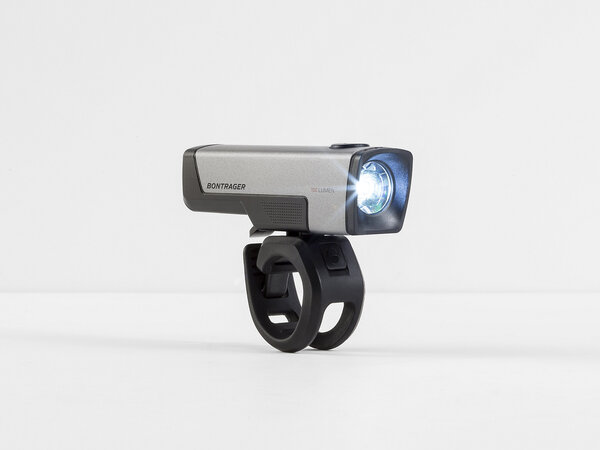
Seller-listed spec: Trek describes the output as "exceeding FL1 industry standards" but does not state FL1 lumen certification, so we show 700 lm as not FL1-rated. No IP rating published.

Seller-listed spec: Cygolite's own 800-lumen figure; no FL1/ANSI testing is stated on its page, so we show it as not FL1-rated. IP67 per the listing.

Seller-listed spec: NiteRider states FL1 testing for this light's impact and water/dust resistance, but its product page does not state the 1300-lumen output itself is FL1-tested — so we show the output as not FL1-rated. IP66 per the maker.
| Light | Output | Rated? | IP | Mount | Price |
|---|---|---|---|---|---|
| Fenix BC26R | 1600 lm | ANSI FL1 | IP68 | Quick-release handlebar clamp, 28-35 mm (front) | $90 |
| Magicshine RN1500 V2.0 | 1500 lm | ANSI FL1 | IPX7 | Handlebar bracket, round bars (front) | $70 |
| Bontrager Ion Comp R | 700 lm | not FL1-rated | — | Quick Connect handlebar 22.2-35mm (front) | $50 MSRP |
| Cygolite Metro Plus 800 | 800 lm | not FL1-rated | IP67 | Hard bar mount (front) | $40 |
| NiteRider Lumina Pro 1300 | 1300 lm | not FL1-rated | IP66 | Handlebar clamp (front) | $113 |
Because a bare lumen number is unregulated — a seller can print anything. The ANSI/PLATO FL1 Standard defines how output and runtime are measured, so an FL1 figure can be compared honestly. We rank on FL1 and label unrated claims as such.
Usually not in any way that lasts. Unrated headline lumens are often measured at the diode for an instant; real sustained output is far lower. We don't rank an unrated claim above a tested FL1 light, however big the number.
To be seen in a lit city, a modest steady front light and a bright rear are enough. To see an unlit road you want real sustained output and a shaped beam — read the FL1 runtime at that brightness, not the eco setting.
Often yes, to ride after dark, and the specifics vary by state — we cover each on its law page. This page is about which lights perform well, which is a separate question from the legal minimum.
Some cards link to Amazon. We may earn a commission on qualifying purchases — affiliate disclosure.