#1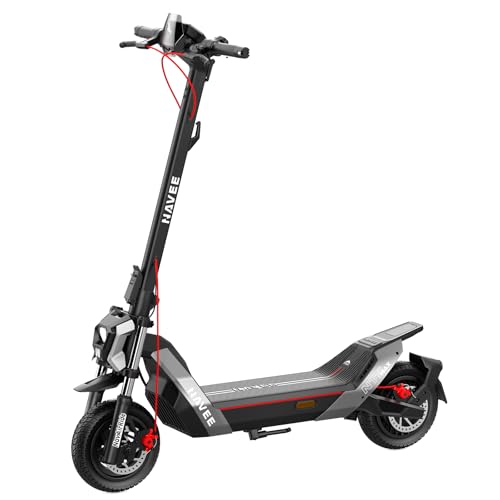
62/100
NAVEE NT5 Max
$1,000NAVEE · commuter
NAVEE NT5 Max pairs a claimed range of 52.8 miles. Best suited to heavier riders.
- 73.9 lb
- IPX6
- 10.5" tubeless
- 331 lb max load
Claimed:52.8 mi·Est. real-world:29–37 mi
41 models · Updated
Ordered by maximum rider load
Rider weight affects an electric scooter more than any other single variable. It reduces range, cuts hill-climbing ability and, past the rated limit, puts real stress on the deck and folding mechanism. This page lists only models whose manufacturers publish a maximum load of 265 lb or more, ranked by our computed score. Two points are worth stressing. First, the manufacturer's range claim is measured at roughly a 165 lb rider, so a heavier rider should expect results towards the lower end of our estimated band rather than the middle. Second, a higher load rating usually comes with a stronger frame and a heavier scooter, so check the weight column if you also need to carry it. Motor power and stated incline capability matter more here than top speed.
Scores compare models within their own category. A budget scooter's 90 and a performance scooter's 90 are not directly comparable.
This page is ordered by maximum rider load. That single specification sets the order here; our overall score is shown alongside each model as secondary context but does not drive the ranking on this page. Either way the order is computed from published data, not opinion, and it does not change because a manufacturer bought advertising. One caveat worth stating plainly: our scores compare models within their own category. A budget scooter's 90 and a performance scooter's 90 are not directly comparable.
Before the ranking, one number deserves your attention more than any other. Every range figure a manufacturer publishes is measured under ideal conditions — a light rider, a low steady speed, flat ground, no wind. Real riding lands well below that, so every model on this page shows both the claim and our estimated real-world band of 55–70% of it. If you take one habit from this site, make it halving the range claim before you trust it.
The NAVEE NT5 Max leads this ranking with a 331 lb load rating at $1,000 (overall score 62/100 within its category). It stands out not by winning any single specification outright but by giving up the least across all of them — an estimated 29–37 miles of real range, IPX6 weather sealing, 73.9 lb. That balance is exactly what a scoring system rewards and a spec-sheet headline hides.
For most buyers on this page, start with the NAVEE NT5 Max and only move on if a specific number below — carry weight, top speed, price — pulls you elsewhere.
NAVEE NT5 Max pairs a claimed range of 52.8 miles. Best suited to heavier riders.
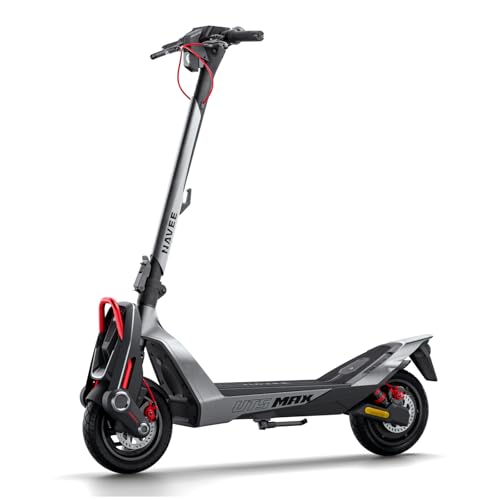
NAVEE UT5 Max pairs a claimed range of 51 miles. Best suited to heavier riders.

NAVEE UT5 UltraX pairs a claimed range of 49.7 miles. Best suited to heavier riders.

NAVEE XT5 Max pairs a claimed top speed of 31.1 mph, a claimed range of 68.4 miles. Best suited to heavier riders, experienced riders who want real speed.

NAVEE XT5 Ultra pairs a claimed top speed of 31.1 mph, a claimed range of 55.9 miles. Best suited to heavier riders, experienced riders who want real speed.

Apollo Phantom 2.0 Stellar (60V) pairs a claimed top speed of 53 mph, a claimed range of 56 miles, a 1800 Wh battery. Best suited to heavier riders, experienced riders who want real speed.

Apollo Phantom 2.0 (52V) pairs a claimed top speed of 44 mph, a claimed range of 50 miles, a 1404 Wh battery. Best suited to heavier riders, experienced riders who want real speed.

Hiboy Titan Pro pairs a claimed top speed of 33 mph, a claimed range of 80 miles, a 1728 Wh battery. Best suited to heavier riders, experienced riders who want real speed.

NAVEE ST5 Max pairs a claimed range of 55.9 miles, a 596 Wh battery. Best suited to heavier riders, anyone riding rough pavement.

Segway SuperScooter GT3 Pro pairs a claimed top speed of 50 mph, a 2160 Wh battery. Best suited to heavier riders, experienced riders who want real speed.
| Scooter | Score | Price | Top speed | Claimed range | Est. real range | Weight | IP |
|---|---|---|---|---|---|---|---|
| NAVEE NT5 Max | 62 | $1,000 | — | 52.8 mi | 29–37 mi | 73.9 lb | IPX6 |
| NAVEE UT5 Max | 57 | $1,000 | — | 51 mi | 28–36 mi | 75 lb | IPX6 |
| NAVEE UT5 UltraX | 50 | $2,100 | — | 49.7 mi | 27–35 mi | 90 lb | IPX6 |
| NAVEE XT5 Max | 72 | — | 31.1 mph | 68.4 mi | 38–48 mi | 78 lb | IPX6 |
| NAVEE XT5 Ultra | 68 | — | 31.1 mph | 55.9 mi | 31–39 mi | 85 lb | IPX6 |
| Apollo Phantom 2.0 Stellar (60V) | 60 | $2,799 | 53 mph | 56 mi | 31–39 mi | 107 lb | IP66 |
| Apollo Phantom 2.0 (52V) | 51 | $2,099 | 44 mph | 50 mi | 28–35 mi | 102 lb | IP66 |
| Hiboy Titan Pro | 65 | $1,530 | 33 mph | 80 mi | 44–56 mi | 103.6 lb | IPX4 |
| NAVEE ST5 Max | 77 | — | — | 55.9 mi | 31–39 mi | 56 lb | IPX6 |
| Segway SuperScooter GT3 Pro | 50 | $2,538 | 50 mph | — | — | 117.1 lb | IPX6 |
| Segway SuperScooter GT3 | 45 | $1,700 | 31 mph | — | — | 87.1 lb | IPX6 |
| Dualtron Thunder 3 | 67 | $3,299 | 63 mph | 80 mi | 44–56 mi | 112 lb | IPX5 |
| EMOVE Cruiser V2 | 70 | $1,399 | 33 mph | 62 mi | 34–43 mi | 74 lb | IPX6 |
| GOTRAX GX1 | 31 | $999 | 30 mph | 35 mi | 19–25 mi | 76 lb | — |
| GOTRAX GX2 | 45 | $1,199 | 35 mph | 40 mi | 22–28 mi | 76 lb | — |
| GOTRAX GX3 Off Road | 36 | $1,699 | 38 mph | 60 mi | 33–42 mi | 94 lb | — |
| Hiboy Titan | 60 | $817 | 28 mph | 46 mi | 25–32 mi | 77.1 lb | IPX4 |
| INMOTION Climber | 69 | — | 23.7 mph | 35 mi | 19–25 mi | 45.76 lb | IPX6 |
| NAVEE GT5 Max | 77 | $800 | — | 55.9 mi | 31–39 mi | 54.7 lb | IPX5 |
| Segway Max G3 | 71 | $1,000 | 28 mph | 50 mi | 28–35 mi | 54.2 lb | IPX6 |
| Apollo City | 65 | $1,299 | 32 mph | 43 mi | 24–30 mi | 65 lb | IP66 |
| Apollo Explore 2.0 | 62 | $849 | 25 mph | 37 mi | 20–26 mi | 60 lb | IP66 |
| Apollo Go Stellar | 63 | $1,199 | 32 mph | 38 mi | 21–27 mi | 55 lb | IP66 |
| Apollo Go | 62 | $849 | 28 mph | 36 mi | 20–25 mi | 49 lb | IP66 |
| Hiboy MAX Pro | 60 | $657 | 22 mph | 46.6 mi | 26–33 mi | 51.59 lb | IPX4 |
| NIU KQi3 Max | 62 | $400 | 20 mph | 40 mi | 22–28 mi | 46.5 lb | IP54 |
| NIU KQi3 Pro | 44 | $300 | 19.9 mph | 31 mi | 17–22 mi | 44.75 lb | IP54 |
| NIU KQi3 Sport | 33 | $419 | 17.4 mph | 24.9 mi | 14–17 mi | 40.6 lb | IP54 |
| Segway E3 Pro | 51 | $600 | 20 mph | 34 mi | 19–24 mi | 40.1 lb | IPX5 |
| Segway F2 Pro | 54 | — | 20 mph | 34 mi | 19–24 mi | 40.8 lb | IPX5 |
| Segway F2 | 38 | — | 18 mph | 25 mi | 14–18 mi | 37.9 lb | IPX5 |
| Segway Max G2 | 62 | $750 | 22 mph | 43 mi | 24–30 mi | 53.5 lb | IPX5 |
| Segway ZT3 Pro | 39 | $899 | 24.9 mph | 18.6 mi | 10–13 mi | 65.5 lb | IPX5 |
| Dualtron Victor Luxury 2.0 | 70 | $1,999 | 48 mph | 60 mi | 33–42 mi | 82 lb | IPX5 |
| Kaabo Mantis King GT | 63 | $1,999 | 43 mph | 56 mi | 31–39 mi | 73 lb | IPX5 |
| Kaabo Mantis 10 Lite | 53 | $1,099 | 31 mph | 37 mi | 20–26 mi | 62 lb | — |
| NIU KQi 300X | 66 | $699 | 23.6 mph | 37.3 mi | 21–26 mi | 48.7 lb | IP55 |
| NIU KQi 300P | 52 | $599 | 20 mph | 30 mi | 17–21 mi | 45.97 lb | IP55 |
| NIU KQi 200P | 45 | $549 | 20 mph | 33.6 mi | 18–24 mi | 43.4 lb | IPX5 |
| NIU KQi 200F | 44 | $569 | 20 mph | 33.6 mi | 18–24 mi | 44.1 lb | IPX5 |
| NIU KQi 100F | 61 | $299 | 17.4 mph | 18 mi | 10–13 mi | 38.8 lb | IPX5 |
Rider weight changes an electric scooter more than any other variable — it cuts range, saps hill-climbing and, past the rated limit, stresses the frame and fold. This page lists only models rated to carry 265 lb or more.
Three models separate themselves at the top of this ranking. Here is what earns each its place, and who each one is really for.
First — NAVEE NT5 Max (62/100, $1,000). It leads its rivals on proper wet-weather sealing, with an estimated 29–37 miles of real-world range. For most people reading this page, it is the default choice — move on only if a specific need below points elsewhere.
Second — NAVEE UT5 Max (57/100, $1,000). It leads its rivals on proper wet-weather sealing, with an estimated 28–36 miles of real-world range. The one to choose if its headline trait matches your priority better than the winner's.
Third — NAVEE UT5 UltraX (50/100, $2,100). It leads its rivals on proper wet-weather sealing, with an estimated 27–35 miles of real-world range. A strong third option that will suit a particular buyer better than the two above.
Across the 41 models that qualify, priced around a median of $1,000, a few stand out on individual specifications even if they do not top the overall score:
Use the full comparison table above to sort every qualifying model on the one specification that decides your purchase — the winner overall is not always the winner for you.
Three mistakes account for most disappointed scooter buyers. None require inside knowledge to avoid — only the discipline to read the specification honestly.
Rider weight is the most underappreciated variable in electric scooters, and choosing well as a heavier rider means reading the specification differently than the marketing assumes. Every range figure a manufacturer publishes is measured at roughly a 165 lb rider; carry more and the real-world number drops, which is why heavier riders should plan around the bottom of our estimated band rather than its middle.
A high load rating is about more than not exceeding a limit. Frames rated to 300 lb and beyond are built with sturdier decks, stems and folding joints, and that structural margin benefits longevity and stability even if you are nowhere near the ceiling. It also tends to come with more motor power, which matters because moving more mass up a hill demands torque a lightweight commuter simply does not have.
Practical advice: leave a comfortable margin below the rated maximum, favour models with stated incline figures and larger motors, and treat pneumatic tyres and suspension as comfort features that matter more, not less, as weight rises. The goal is a scooter that is working within itself at your weight, not one straining at its limit.
Which specification should I prioritise? Start with the estimated real-world range against your commute, then weight, then weather sealing. Those three decide daily satisfaction far more than top speed, which is the number most buyers over-index on.
Is the highest-scoring model always the right buy? It is the best all-rounder, which is the right default. But if one specification dominates your decision — a stair carry, a long commute, a wet climate — the model that wins on that single axis may serve you better than the overall leader.
How current are these prices and specs? Specifications are transcribed from manufacturers' official pages and carry a last-updated date. Prices come from our tracker and can change between visits, so the model pages show a running price history to help you judge the timing.