Electric Scooter Laws in California
Every figure below is quoted from Cal. Veh. Code §§ 407.5, 21220–21235, 22411. Verified July 24, 2026.
California regulates these devices as a “motorized scooter” under Cal. Veh. Code §§ 407.5, 21220–21235, 22411. Riders may not exceed 15 mph, though the definition itself sets no device limit. A driver's licence or instruction permit is required. Helmets: required under 18. Sidewalk riding is prohibited by state law.
Any two-wheeled device with handlebars and either a floorboard designed to be stood upon or a seat with footrests, powered by an electric motor. Motorcycles, motor-driven cycles, motorised bicycles and mopeds are expressly excluded from the definition.
The rules at a glance
| Rule | California | Statute |
|---|---|---|
| Legal term used | motorized scooter | Cal. Veh. Code § 407.5(a) |
| Speed in the device definition | Not specified in state law | Cal. Veh. Code § 407.5(a) |
| Speed limit on the rider | 15 mph | Cal. Veh. Code § 22411 |
| Weight in the device definition | Not specified in state law | Cal. Veh. Code § 407.5(a) |
| Max road speed limit | 25 mph | Cal. Veh. Code § 21235(b) |
| Motor power limit | Not specified in state law | — |
| Minimum age | Not specified in state law | — |
| Helmet | Required under 18 | Cal. Veh. Code § 21235(c) |
| Driver's licence | Required | Cal. Veh. Code § 21235(d) |
| Registration | Not required | Cal. Veh. Code § 21224(a) |
| Insurance | Not required | Cal. Veh. Code § 21224(a) |
| Sidewalk riding | Prohibited by state law | Cal. Veh. Code § 21235(g) |
| Bike lanes and paths | Permitted | Cal. Veh. Code § 21230 |
| Impaired riding | Applies to riders | Cal. Veh. Code § 21221 |
| Local rules may be stricter | Yes | Cal. Veh. Code § 21230 |
Italicised “Not specified in state law” means we read the cited statute and found no provision on that point. It is not a statement that the activity is permitted.
How California classifies an electric scooter
California does not use the phrase “electric scooter” in its vehicle code. The operative term is motorized scooter, and the rules on this page apply to a device only if it meets that statutory definition. This matters more than it sounds: a scooter that falls outside the definition is not automatically illegal, but it is no longer covered by the permissions written for motorized scooters, and is instead treated under whatever other vehicle class it happens to fit.
“any two-wheeled device that has handlebars” — Cal. Veh. Code § 407.5(a)
The controlling provisions are Cal. Veh. Code §§ 407.5, 21220–21235, 22411. Every figure in the table above is taken from that text, and each row links to the section it came from, so the wording can be checked against the state's own publication rather than against our summary of it.
California is one of the few states that requires a driver's licence or instruction permit to ride. The Vehicle Code sets a 15 mph ceiling on the rider regardless of what the scooter can do, and separately limits which roads may be used.
Speed limits that apply in California
California takes the behavioural route: 15 mph is what you may do, not what the scooter may be built to do. The definition itself is silent on speed.
“at a speed in excess of 15 miles per hour” — Cal. Veh. Code § 22411
Separately, California restricts which roads may be used by reference to the posted limit — the relevant threshold is 25 mph. A rider can therefore be within the device speed rule and still be on a road the statute does not allow, which is a distinction worth understanding before planning a commute on a fast arterial road.
Age, helmet and licence rules in California
Three rider-side questions decide whether a given person may legally ride: how old they are, whether they must wear a helmet, and whether they need a driver's licence. California answers 2 of those three in statute.
- Minimum age: Not specified in state law.
- Helmet: Required under 18.
- Driver's licence: Required — this is unusual and catches many riders out.
“without wearing a properly fitted and fastened bicycle helmet” — Cal. Veh. Code § 21235(c)
“without a valid driver's license or instruction permit” — Cal. Veh. Code § 21235(d)
A “Not specified in state law” entry means the legislature did not address that question in Cal. Veh. Code §§ 407.5, 21220–21235, 22411. Silence is not permission. It usually means the matter was left to local government, which may well have legislated on it.
Where you may ride in California
The two surfaces that generate most enforcement are sidewalks and bike lanes. In California the statutory position is: sidewalks — prohibited by state law; bike lanes and bike paths — permitted by state law, subject to any local restriction.
“upon a sidewalk, except as may be necessary to enter or leave adjacent property” — Cal. Veh. Code § 21235(g)
“may be operated on a bicycle path or trail or bikeway” — Cal. Veh. Code § 21230
Sidewalk rules are the most common point of difference between the state statute and the ordinance actually enforced where a rider lives. A statewide prohibition tends to be absolute; a statewide permission tends to be conditional, because most states let a city withdraw it downtown or on named streets.
Registration, insurance and impairment rules
- Registration or title: Not required.
- Insurance: Not required.
- Riding under the influence: Impaired-driving provisions are applied to riders by statute.
“relating to financial responsibility, registration, and license plate requirements” — Cal. Veh. Code § 21224(a)
“provisions concerning driving under the influence of alcoholic beverages or drugs” — Cal. Veh. Code § 21221
Most states legislating on this device class deliberately exempt it from registration and insurance, which is precisely what makes a scooter cheap to own next to a moped. Impairment runs the other way: several apply the full driving-under-the-influence framework to a device needing no licence at all, so no licence requirement does not mean no enforcement.
What cities and counties can change
California does not attempt to settle the question statewide. The code sets an outer limit and leaves municipalities free to tighten it, meaning the rule that binds you is usually written closer to home than the vehicle code.
“trail, or bikeway prohibits that operation by ordinance” — Cal. Veh. Code § 21230
State law tells you what is possible; the local ordinance tells you what is permitted where you ride. We have deliberately not extended this page into municipal code, because doing it properly would mean reading thousands of ordinances rather than guessing at them.
Which scooters are street legal in California
Because California attaches a 15 mph figure to the definition, a scooter's published top speed is the fastest way to see whether it sits inside or outside the category. A large share of the current market is built to exceed that figure — performance models routinely claim 30 to 60 mph — so the honest position is that many popular scooters do not meet the motorized scooter definition in this state as sold.
You can run any model in our database against these thresholds with the legality checker. It answers a narrow question — does this specification fall inside this definition — and declines to answer at all where we lack a published figure.
For California we could not verify one item in the sections we read: a minimum rider age. These render as “Not specified in state law” throughout the page.
What California's threshold means for the scooters actually on sale
Run California's 15 mph figure across our catalogue and 46 of 46 models with a published top speed fall outside it, against 0 inside. That is 100% of the tracked market on the wrong side of one number. Not one model we track is built to stay within the 15 mph figure. That is a genuine finding about how the industry builds scooters rather than a gap in our data, and it is the single most important thing a buyer in California should understand before ordering.
Being outside the line is not a matter of degree. The nearest miss we track is the Segway E2 Plus II, claiming 15.5 mph against the 15 mph figure — a gap of 0.5 mph. The fastest model we track claims 63 mph, several times the statutory figure. A scooter a fraction over and one built for triple are treated identically by the rider speed limit, which is why the statutory number matters more than how fast the machine feels.
Owning a scooter above the line is not an offence in California, and nothing here suggests otherwise. Fast models are sold for private land and for states that draw the line elsewhere. The 15 mph rider speed limit governs one thing only: whether the permissions written for motorized scooters attach to the machine.
How California compares with the other states we have verified
State scooter law is not converging on a single template. Each legislature picked its own definition, its own numbers and its own list of things to leave unsaid, and the differences are large enough that a rider crossing a state line can move from an explicit permission to an unaddressed silence. Set against the other 16 states we have verified to the same standard, California sits as follows.
- Speed. California's 15 mph figure is the strictest of the states we have verified — Massachusetts allows 20 mph, Ohio allows 20 mph, Virginia allows 20 mph, and identical to Nevada, New York, Oregon, Utah.
- Licensing. California requires a driver's licence. Among the states we have verified this is the exception rather than the rule.
- Minimum age. California sets none in statute, unlike Illinois (18) and Minnesota (12) and New York (16) and Oregon (16) and Virginia (14).
- Helmets. California legislates a helmet rule at state level (required under 18), which fewer than half the states we have verified do.
We make this comparison only across states whose statutes we have read in full. It is not a ranking of how scooter-friendly a state is, and it carries no implication about states we have not published — for those, the honest answer is that we have not yet verified them, not that their rules resemble these.
Scooters you can ride on California roads
California's definition sets no device speed limit, so every scooter we track qualifies — the constraint is on how and where it is ridden, not on the machine. Riders may not exceed 15 mph, whatever the scooter is capable of. Operation is limited to roads posted at 25 mph or less.
Some cards below link to Amazon. We may earn a commission on qualifying purchases — this never affects scoring or which scooters appear here. Affiliate disclosure.
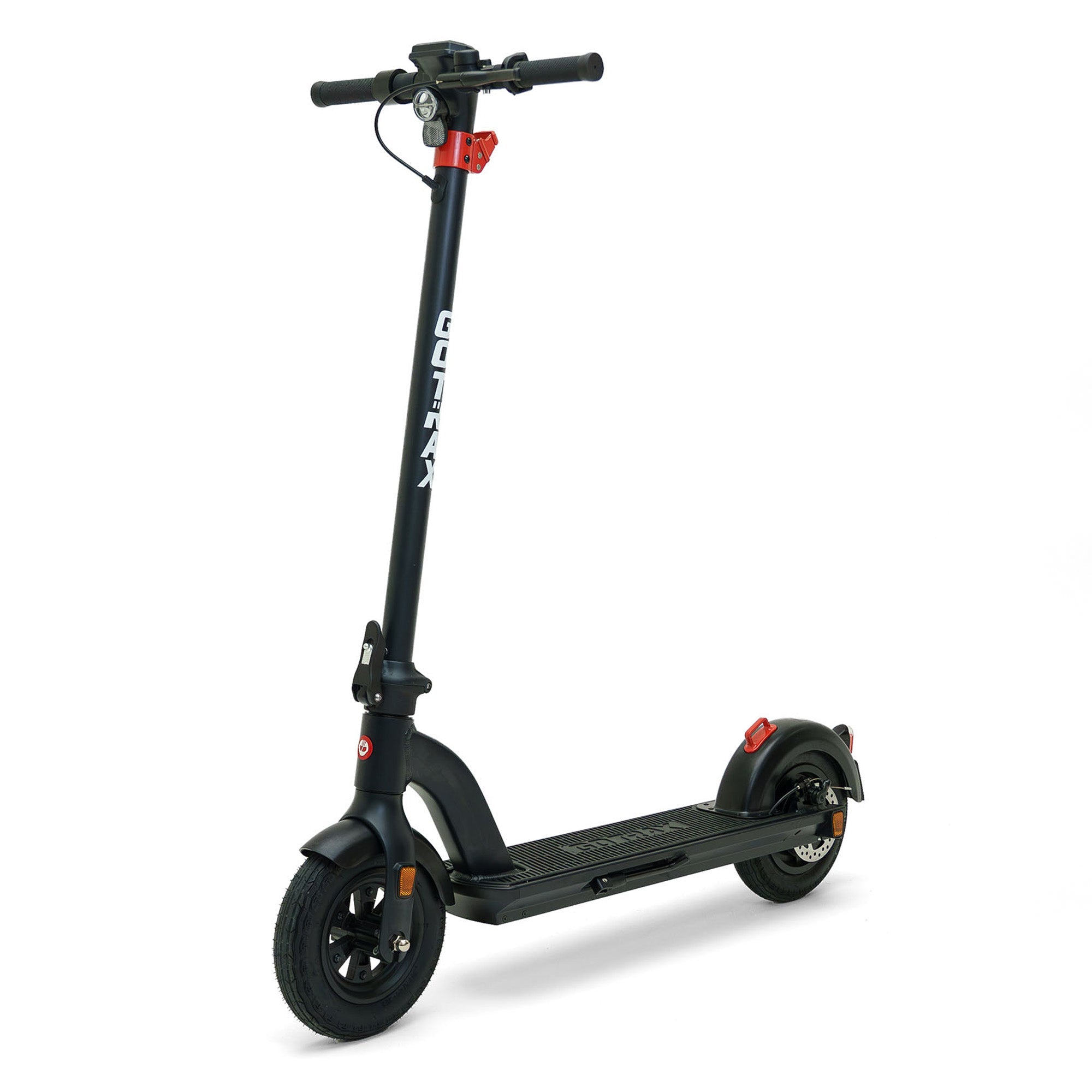
- Top speed: 17 mph
- Motor: 350 W
- Battery: 490 Wh
- Weight: —
- Max load: 264 lb
- IP: —
- Tyre: —
Limited data — scored on 3 of 5 components
17 mph claimed — California sets no device speed limit; the 15 mph rider cap and roads-posted-25-mph-or-less rule apply however fast it goes.

- Top speed: —
- Motor: —
- Battery: 596 Wh
- Weight: 54.7 lb
- Max load: 286 lb
- IP: IPX5
- Tyre: 10" tubeless
Limited data — scored on 4 of 5 components
California sets no device speed limit; the 15 mph rider cap and roads-posted-25-mph-or-less rule apply however fast it goes.

- Top speed: —
- Motor: —
- Battery: 596 Wh
- Weight: 56 lb
- Max load: 330 lb
- IP: IPX6
- Tyre: 10" tubeless
Limited data — scored on 3 of 5 components
California sets no device speed limit; the 15 mph rider cap and roads-posted-25-mph-or-less rule apply however fast it goes.

- Top speed: 31.1 mph
- Motor: —
- Battery: —
- Weight: 78 lb
- Max load: 331 lb
- IP: IPX6
- Tyre: 12" tubeless
Limited data — scored on 3 of 5 components
31.1 mph claimed — California sets no device speed limit; the 15 mph rider cap and roads-posted-25-mph-or-less rule apply however fast it goes.

- Top speed: 28 mph
- Motor: 2000 W
- Battery: 597 Wh
- Weight: 54.2 lb
- Max load: 286 lb
- IP: IPX6
- Tyre: 11" tubeless
28 mph claimed — California sets no device speed limit; the 15 mph rider cap and roads-posted-25-mph-or-less rule apply however fast it goes.
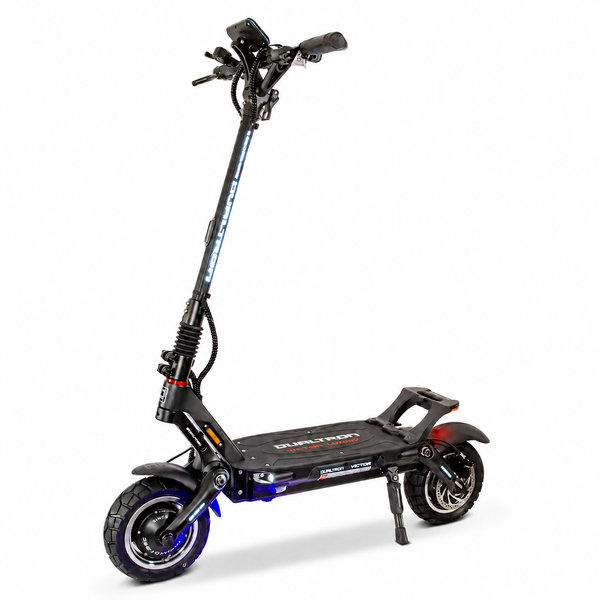
- Top speed: 48 mph
- Motor: 4250 W
- Battery: 1890 Wh
- Weight: 82 lb
- Max load: 265 lb
- IP: IPX5
- Tyre: 10" pneumatic
48 mph claimed — California sets no device speed limit; the 15 mph rider cap and roads-posted-25-mph-or-less rule apply however fast it goes.
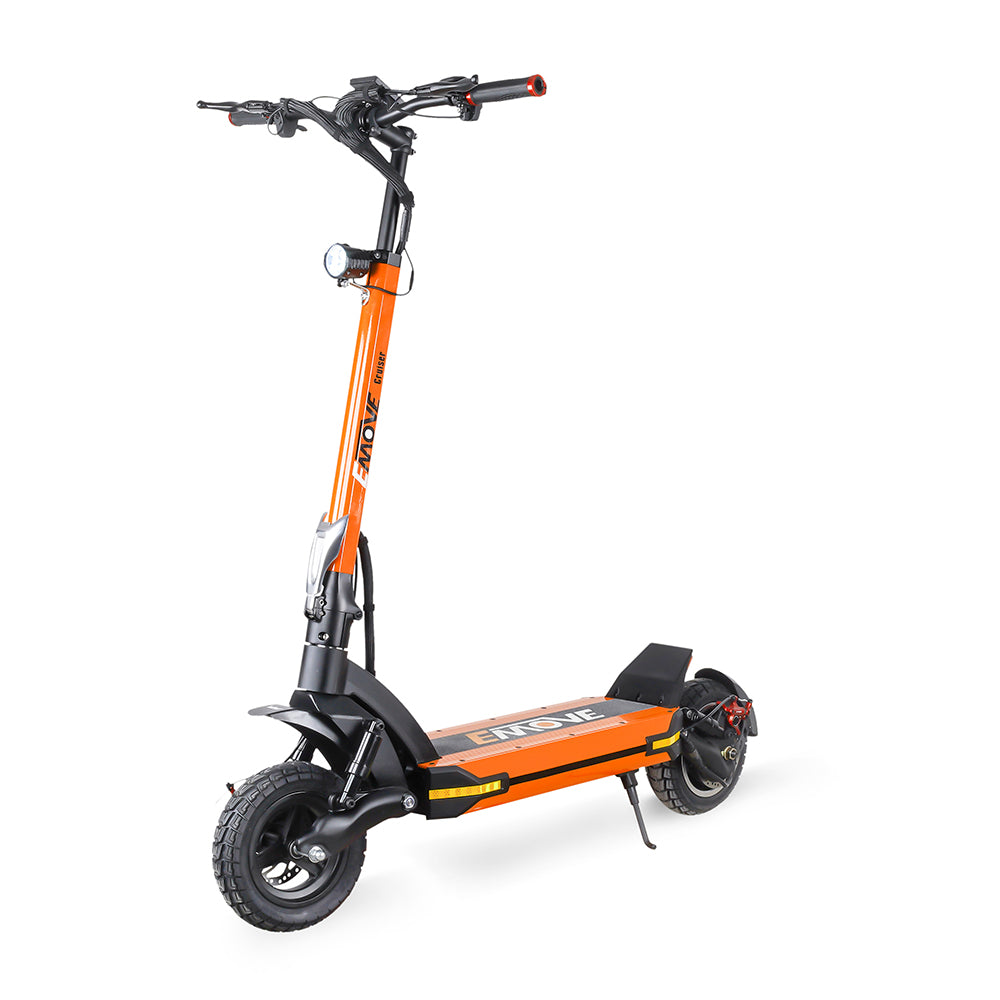
- Top speed: 33 mph
- Motor: 1000 W
- Battery: 1560 Wh
- Weight: 74 lb
- Max load: 330 lb
- IP: IPX6
- Tyre: 10" tubeless
33 mph claimed — California sets no device speed limit; the 15 mph rider cap and roads-posted-25-mph-or-less rule apply however fast it goes.

- Top speed: 23.7 mph
- Motor: 1500 W
- Battery: 533 Wh
- Weight: 45.76 lb
- Max load: 287 lb
- IP: IPX6
- Tyre: 10" pneumatic
Limited data — scored on 4 of 5 components
23.7 mph claimed — California sets no device speed limit; the 15 mph rider cap and roads-posted-25-mph-or-less rule apply however fast it goes.
Equipment California law requires
California attaches equipment rules to riding, quoted below from the statute. This is a summary of what the law says — it is not a compliance check. We do not test any product, and a manufacturer's published figure is not the same measure as the statute's: a lumen rating describes output, while the statute specifies a visibility distance, and the two do not convert. Treat these as the statutory shopping list, then confirm any product against the law yourself.
Front light
Cal. Veh. Code § 21223(a)(1)During darkness, a white front lamp that lights the road ahead and is visible from 300 feet in front and from the sides. A lamp worn by the operator may be used instead.
“a lamp emitting a white light” Cal. Veh. Code § 21223(a)(1)
The statute measures visibility distance, not lumens: a lumen rating describes output, not how far a light is seen, which depends on optics, colour and conditions. We do not verify any light against the 300-foot figure.
Rear light
Cal. Veh. Code § 21223(a)(2)During darkness, a red rear reflector visible from 500 feet, plus a white or yellow reflector on each side visible from 200 feet. A reflector worn by the operator may substitute for the rear one.
“a red reflector on the rear that is visible from a distance” Cal. Veh. Code § 21223(a)(2)
A reflector returns another vehicle's headlight rather than emitting its own; the statute measures a visibility distance, not a product's lumen or candela figure, which we do not verify.
Brake
Cal. Veh. Code § 21235(a)A brake that lets the operator make a braked wheel skid on dry, level, clean pavement.
“a brake that will enable the operator to make a braked wheel skid” Cal. Veh. Code § 21235(a)
Every scooter we track ships with a braking system; this is a functional requirement, not a product a rider buys separately.
Helmet
Cal. Veh. Code § 21235(c)Operators under 18 must wear a properly fitted and fastened bicycle helmet meeting the § 21212 standards. California has no statewide adult helmet requirement for motorized scooters.
“a properly fitted and fastened bicycle helmet” Cal. Veh. Code § 21235(c)
The statute references the CVC § 21212 bicycle-helmet standard, not a consumer certification such as CPSC. We describe the requirement and never label any helmet 'compliant'.
Statutory text verified against the official source on July 28, 2026. Nothing on this page certifies a product as legal, and we do not filter or badge accessories by legality — that is a claim we are not positioned to make.
Check a specific scooter against California law
Compare any model in our database against the thresholds quoted on this page.
Open the legality checkerCommon questions
Are electric scooters legal in California?
California recognises the device class in Cal. Veh. Code §§ 407.5, 21220–21235, 22411, under the term “motorized scooter”. A scooter meeting that statutory definition is addressed by state law; a scooter falling outside it is not covered by those provisions.
Do you need a driver's licence to ride an electric scooter in California?
Yes. California statute requires a valid driver's licence or instruction permit to operate a motorized scooter.
Is a helmet required in California?
Required under 18 under Cal. Veh. Code §§ 407.5, 21220–21235, 22411.
Can you ride an electric scooter on the sidewalk in California?
Prohibited by state law.
Does an electric scooter need to be registered or insured in California?
Registration: not required. Insurance: not required.
What is the fastest electric scooter you can legally ride in California?
California works to a 15 mph figure in Cal. Veh. Code §§ 407.5, 21220–21235, 22411. Read the quoted statutory text on this page to see whether it caps the rider or defines the device.
Sources
We cite state statutes and official legislative publications only. News articles, law-firm pages, forums and aggregators are not used as sources on this site.
- Cal. Veh. Code § 21230— leginfo.legislature.ca.gov · verified July 24, 2026
- Cal. Veh. Code § 21221— leginfo.legislature.ca.gov · verified July 24, 2026
- Cal. Veh. Code § 407.5(a)— leginfo.legislature.ca.gov · verified July 24, 2026
- Cal. Veh. Code § 21235(c)— leginfo.legislature.ca.gov · verified July 24, 2026
- Cal. Veh. Code § 21224(a)— leginfo.legislature.ca.gov · verified July 24, 2026
- Cal. Veh. Code § 22411— leginfo.legislature.ca.gov · verified July 24, 2026
Other states we have verified
This page is a plain-English summary of published statutory text, provided for general information. It is not legal advice and does not create a lawyer–client relationship. Laws change and local ordinances may impose stricter rules than the state statute. Verify the current text at the official links above before relying on it. Editorial length: 1,449 words.