Electric Scooter Laws in Massachusetts
Every figure below is quoted from Mass. Gen. Laws c. 90, §§ 1, 1E. Verified July 24, 2026.
Massachusetts regulates these devices as a “motorized scooter” under Mass. Gen. Laws c. 90, §§ 1, 1E. Riders may not exceed 20 mph, though the definition itself sets no device limit. A driver's licence or instruction permit is required. Helmets: required for all riders.
Massachusetts's official General Laws site was captured from the rendered section pages in a browser on 2026-07-25 (US exit); the statutory text is archived in our repository.
A 2-wheeled tandem or 3-wheeled device with handlebars, designed to be stood or sat upon, powered by an electric or gas motor with or without human propulsion. It excludes a motorcycle, electric bicycle, motorized bicycle or 3-wheeled motorized wheelchair. The definition sets no speed or weight ceiling.
The rules at a glance
| Rule | Massachusetts | Statute |
|---|---|---|
| Legal term used | motorized scooter | Mass. Gen. Laws c. 90 § 1 |
| Speed in the device definition | Not specified in state law | Mass. Gen. Laws c. 90 § 1 |
| Speed limit on the rider | 20 mph | Mass. Gen. Laws c. 90 § 1E |
| Weight in the device definition | Not specified in state law | Mass. Gen. Laws c. 90 § 1 |
| Max road speed limit | Not specified in state law | — |
| Motor power limit | Not specified in state law | — |
| Minimum age | Not specified in state law | — |
| Helmet | Required for all riders | Mass. Gen. Laws c. 90 § 1E |
| Driver's licence | Required | Mass. Gen. Laws c. 90 § 1E |
| Registration | Not specified in state law | — |
| Insurance | Not specified in state law | — |
| Sidewalk riding | Not specified in state law | — |
| Bike lanes and paths | Not specified in state law | — |
| Impaired riding | Not specified in state law | — |
| Local rules may be stricter | Not specified in state law | — |
Italicised “Not specified in state law” means we read the cited statute and found no provision on that point. It is not a statement that the activity is permitted.
How Massachusetts classifies an electric scooter
Massachusetts does not use the phrase “electric scooter” in its vehicle code. The operative term is motorized scooter, and the rules on this page apply to a device only if it meets that statutory definition. This matters more than it sounds: a scooter that falls outside the definition is not automatically illegal, but it is no longer covered by the permissions written for motorized scooters, and is instead treated under whatever other vehicle class it happens to fit.
“any 2 wheeled tandem or 3 wheeled device, that has handlebars” — Mass. Gen. Laws c. 90 § 1
The controlling provisions are Mass. Gen. Laws c. 90, §§ 1, 1E. Every figure in the table above is taken from that text, and each row links to the section it came from, so the wording can be checked against the state's own publication rather than against our summary of it.
Massachusetts regulates the 'motorized scooter' more tightly than almost any state we track, and it defines the device by form rather than by a speed or weight ceiling: any two-wheeled tandem or three-wheeled device with handlebars, stood or sat upon, driven by an electric or gas motor (G.L. c. 90 § 1). Section 1E then stacks the restrictions. A rider must hold a valid driver's licence or learner's permit — the only state we track that requires a licence to ride a stand-up scooter. Speed is capped at 20 mph. A helmet is mandatory for every rider. The scooter must have working stop and turn signals so the rider keeps both hands on the handlebars, and it may not carry a passenger. Most striking, § 1E bars operation on any public way at any time after sunset or before sunrise — night riding is simply prohibited, which is why we record no lighting requirement: the statute removes the situation a light would answer. Scooters may use public ways but not limited-access or express state highways where posted against them.
Speed limits that apply in Massachusetts
Massachusetts takes the behavioural route: 20 mph is what you may do, not what the scooter may be built to do. The definition itself is silent on speed.
“at a speed in excess of 20 miles per hour” — Mass. Gen. Laws c. 90 § 1E
Age, helmet and licence rules in Massachusetts
Three rider-side questions decide whether a given person may legally ride: how old they are, whether they must wear a helmet, and whether they need a driver's licence. Massachusetts answers 2 of those three in statute.
- Minimum age: Not specified in state law.
- Helmet: Required for all riders.
- Driver's licence: Required — this is unusual and catches many riders out.
“shall wear protective headgear conforming with such minimum standards of construction” — Mass. Gen. Laws c. 90 § 1E
“not possessing a valid driver's license or learner's permit” — Mass. Gen. Laws c. 90 § 1E
When a row says “Not specified in state law”, the statute simply does not speak to it. We publish that absence rather than borrowing a rule from a neighbouring state, and you should not read it as either a green light or a prohibition.
Where you may ride in Massachusetts
The two surfaces that generate most enforcement are sidewalks and bike lanes. In Massachusetts the statutory position is: sidewalks — not specified in state law; bike lanes and bike paths — not specified in state law.
Sidewalk access is where state law and local practice diverge most often. A prohibition written into the vehicle code rarely has local exceptions, whereas a permission almost always does — cities routinely close specific districts to scooters.
Registration, insurance and impairment rules
- Registration or title: Not specified in state law.
- Insurance: Not specified in state law.
- Riding under the influence: Not specified in state law.
Exempting the device from titling, registration and insurance is the substance of most scooter legislation; it is what separates this class from a moped in cost terms. Do not extend that leniency to impairment, which is commonly governed by the ordinary driving provisions.
What cities and counties can change
We found no provision in Mass. Gen. Laws c. 90, §§ 1, 1E expressly authorising local authorities to add their own rules for motorized scooters. That silence is not a guarantee of statewide uniformity — it only means the point is not addressed in the sections we verified.
The practical rule is to treat the state statute as the outer boundary and the local ordinance as the operative one. Nothing on this page reflects municipal code — we publish only state provisions we have read in full, and a city can be stricter on every row above.
Which scooters are street legal in Massachusetts
Because Massachusetts attaches a 20 mph figure to the definition, a scooter's published top speed is the fastest way to see whether it sits inside or outside the category. A large share of the current market is built to exceed that figure — performance models routinely claim 30 to 60 mph — so the honest position is that many popular scooters do not meet the motorized scooter definition in this state as sold.
To test a specific scooter, use the legality checker: it compares the manufacturer's published figures with the statutory thresholds above. Where we hold no figure for a model, it says so instead of substituting an estimate.
For Massachusetts we could not verify 5 items in the sections we read: a minimum rider age, a registration requirement, an insurance requirement, sidewalk riding, riding under the influence. These render as “Not specified in state law” throughout the page.
What Massachusetts's threshold means for the scooters actually on sale
Run Massachusetts's 20 mph figure across our catalogue and 27 of 46 models with a published top speed fall outside it, against 19 inside. That is 59% of the tracked market on the wrong side of one number. That still leaves a workable shortlist, concentrated in the commuter and budget tiers rather than the performance end.
The slowest model above the threshold is the Apollo Dash at 21 mph, exceeding it by 1 mph. The fastest model we track claims 63 mph, several times the statutory figure. A scooter a fraction over and one built for triple are treated identically by the rider speed limit, which is why the statutory number matters more than how fast the machine feels.
To be clear about what this does and does not mean: Massachusetts does not prohibit owning a scooter above 20 mph. The threshold determines whether the device counts as motorized scooter in law, which is what carries the exemptions and the path access described above.
How Massachusetts compares with the other states we have verified
State scooter law is not converging on a single template. Each legislature picked its own definition, its own numbers and its own list of things to leave unsaid, and the differences are large enough that a rider crossing a state line can move from an explicit permission to an unaddressed silence. Set against the other 16 states we have verified to the same standard, Massachusetts sits as follows.
- Speed. Massachusetts's 20 mph figure is the highest of the states we have verified — California uses 15 mph, Nevada uses 15 mph, New York uses 15 mph, Oregon uses 15 mph, Utah uses 15 mph, and identical to Ohio, Virginia.
- Licensing. Massachusetts requires a driver's licence. Among the states we have verified this is the exception rather than the rule.
- Minimum age. Massachusetts sets none in statute, unlike Illinois (18) and Minnesota (12) and New York (16) and Oregon (16) and Virginia (14).
- Helmets. Massachusetts legislates a helmet rule at state level (required for all riders), which fewer than half the states we have verified do.
We make this comparison only across states whose statutes we have read in full. It is not a ranking of how scooter-friendly a state is, and it carries no implication about states we have not published — for those, the honest answer is that we have not yet verified them, not that their rules resemble these.
Scooters you can ride on Massachusetts roads
Massachusetts's definition sets no device speed limit, so every scooter we track qualifies — the constraint is on how and where it is ridden, not on the machine. Riders may not exceed 20 mph, whatever the scooter is capable of.
Some cards below link to Amazon. We may earn a commission on qualifying purchases — this never affects scoring or which scooters appear here. Affiliate disclosure.
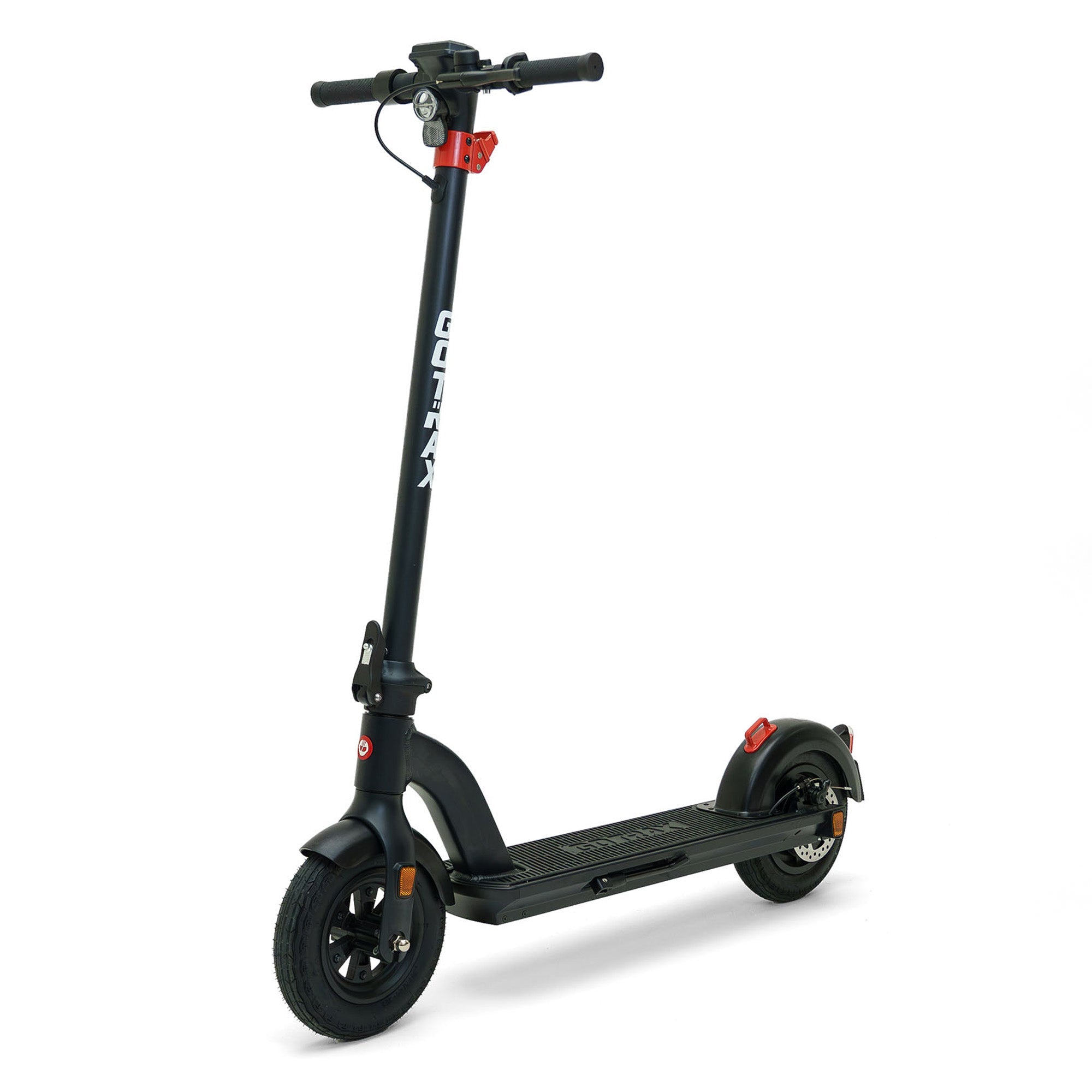
- Top speed: 17 mph
- Motor: 350 W
- Battery: 490 Wh
- Weight: —
- Max load: 264 lb
- IP: —
- Tyre: —
Limited data — scored on 3 of 5 components
17 mph claimed — Massachusetts sets no device speed limit; riders may not exceed 20 mph.

- Top speed: —
- Motor: —
- Battery: 596 Wh
- Weight: 54.7 lb
- Max load: 286 lb
- IP: IPX5
- Tyre: 10" tubeless
Limited data — scored on 4 of 5 components
Massachusetts sets no device speed limit; riders may not exceed 20 mph.

- Top speed: —
- Motor: —
- Battery: 596 Wh
- Weight: 56 lb
- Max load: 330 lb
- IP: IPX6
- Tyre: 10" tubeless
Limited data — scored on 3 of 5 components
Massachusetts sets no device speed limit; riders may not exceed 20 mph.

- Top speed: 31.1 mph
- Motor: —
- Battery: —
- Weight: 78 lb
- Max load: 331 lb
- IP: IPX6
- Tyre: 12" tubeless
Limited data — scored on 3 of 5 components
31.1 mph claimed — Massachusetts sets no device speed limit; riders may not exceed 20 mph.

- Top speed: 28 mph
- Motor: 2000 W
- Battery: 597 Wh
- Weight: 54.2 lb
- Max load: 286 lb
- IP: IPX6
- Tyre: 11" tubeless
28 mph claimed — Massachusetts sets no device speed limit; riders may not exceed 20 mph.
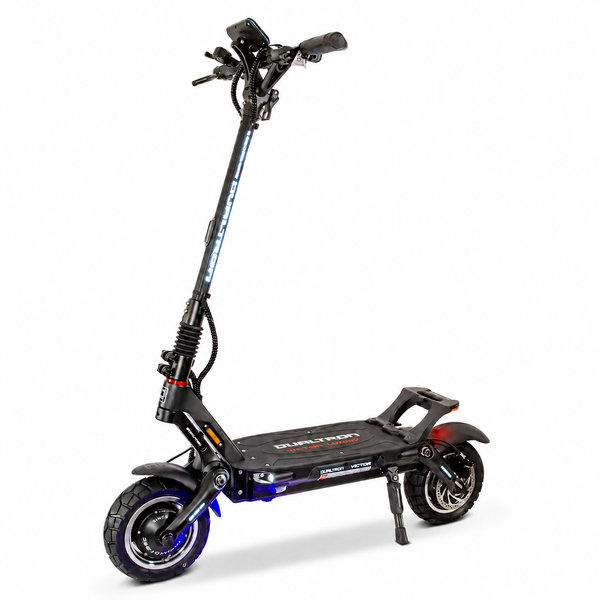
- Top speed: 48 mph
- Motor: 4250 W
- Battery: 1890 Wh
- Weight: 82 lb
- Max load: 265 lb
- IP: IPX5
- Tyre: 10" pneumatic
48 mph claimed — Massachusetts sets no device speed limit; riders may not exceed 20 mph.
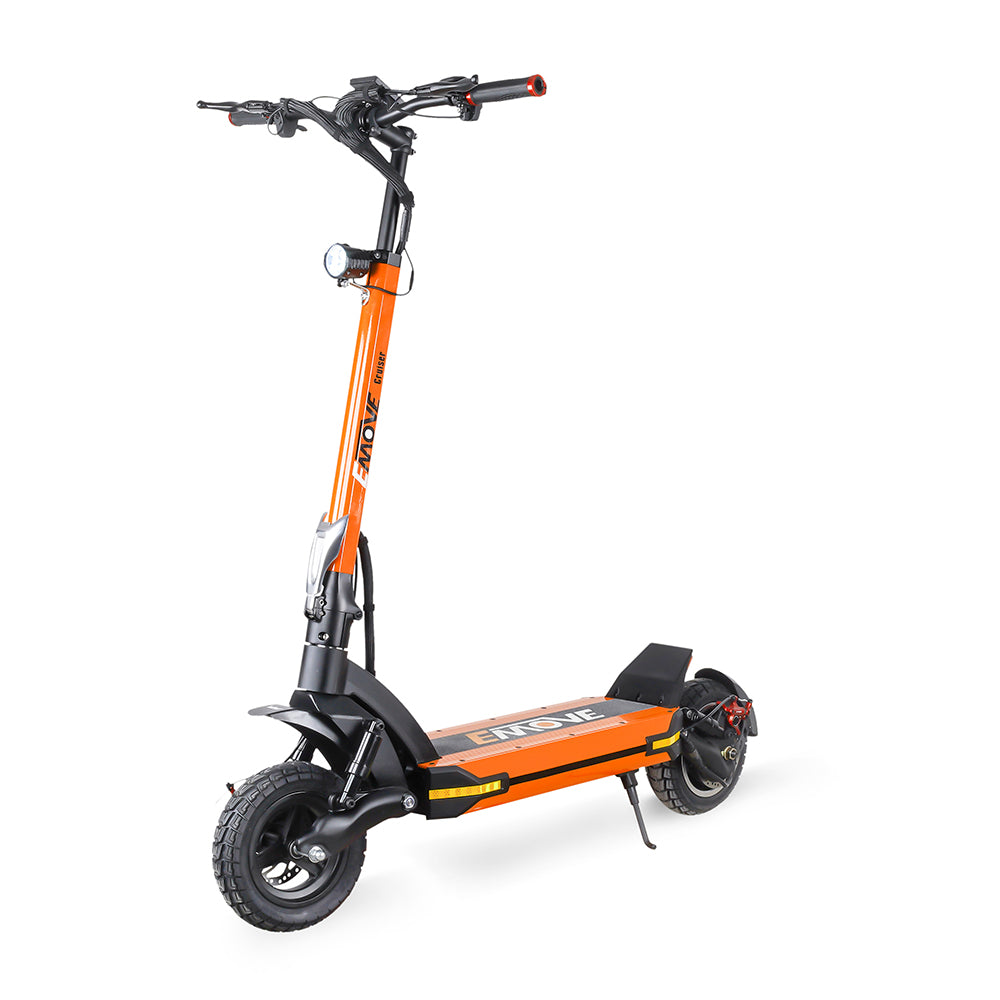
- Top speed: 33 mph
- Motor: 1000 W
- Battery: 1560 Wh
- Weight: 74 lb
- Max load: 330 lb
- IP: IPX6
- Tyre: 10" tubeless
33 mph claimed — Massachusetts sets no device speed limit; riders may not exceed 20 mph.

- Top speed: 23.7 mph
- Motor: 1500 W
- Battery: 533 Wh
- Weight: 45.76 lb
- Max load: 287 lb
- IP: IPX6
- Tyre: 10" pneumatic
Limited data — scored on 4 of 5 components
23.7 mph claimed — Massachusetts sets no device speed limit; riders may not exceed 20 mph.
Check a specific scooter against Massachusetts law
Compare any model in our database against the thresholds quoted on this page.
Open the legality checkerCommon questions
Are electric scooters legal in Massachusetts?
Massachusetts recognises the device class in Mass. Gen. Laws c. 90, §§ 1, 1E, under the term “motorized scooter”. A scooter meeting that statutory definition is addressed by state law; a scooter falling outside it is not covered by those provisions.
Do you need a driver's licence to ride an electric scooter in Massachusetts?
Yes. Massachusetts statute requires a valid driver's licence or instruction permit to operate a motorized scooter.
Is a helmet required in Massachusetts?
Required for all riders under Mass. Gen. Laws c. 90, §§ 1, 1E.
Can you ride an electric scooter on the sidewalk in Massachusetts?
Not specified in state law.
Does an electric scooter need to be registered or insured in Massachusetts?
Registration: Not specified in state law. Insurance: Not specified in state law.
What is the fastest electric scooter you can legally ride in Massachusetts?
Massachusetts works to a 20 mph figure in Mass. Gen. Laws c. 90, §§ 1, 1E. Read the quoted statutory text on this page to see whether it caps the rider or defines the device.
Sources
We cite state statutes and official legislative publications only. News articles, law-firm pages, forums and aggregators are not used as sources on this site.
- Mass. Gen. Laws c. 90 § 1— malegislature.gov · verified July 24, 2026
- Mass. Gen. Laws c. 90 § 1E— malegislature.gov · verified July 24, 2026
Other states we have verified
This page is a plain-English summary of published statutory text, provided for general information. It is not legal advice and does not create a lawyer–client relationship. Laws change and local ordinances may impose stricter rules than the state statute. Verify the current text at the official links above before relying on it. Editorial length: 1,396 words.